Pac-Cat
Solve. Munch. Conquer.
Step into a vibrant, neon-drenched world where retro arcade vibes meet modern puzzle strategy!
Pac-Cat was the team’s first exploration of a fully AI-driven development workflow from concept to implementation. The goal was to use Cursor to generate a playable prototype, then establish a seamless pipeline between Figma and Unity. Along the way, the project required inventive technical workarounds and thoughtful art-direction decisions to overcome the limitations of emerging AI tools while maintaining a cohesive player experience.
Contributions
Art Direction
UI & UX
Animation
Team Management
AI-Driven Workflow: Claude → Figma → Unity
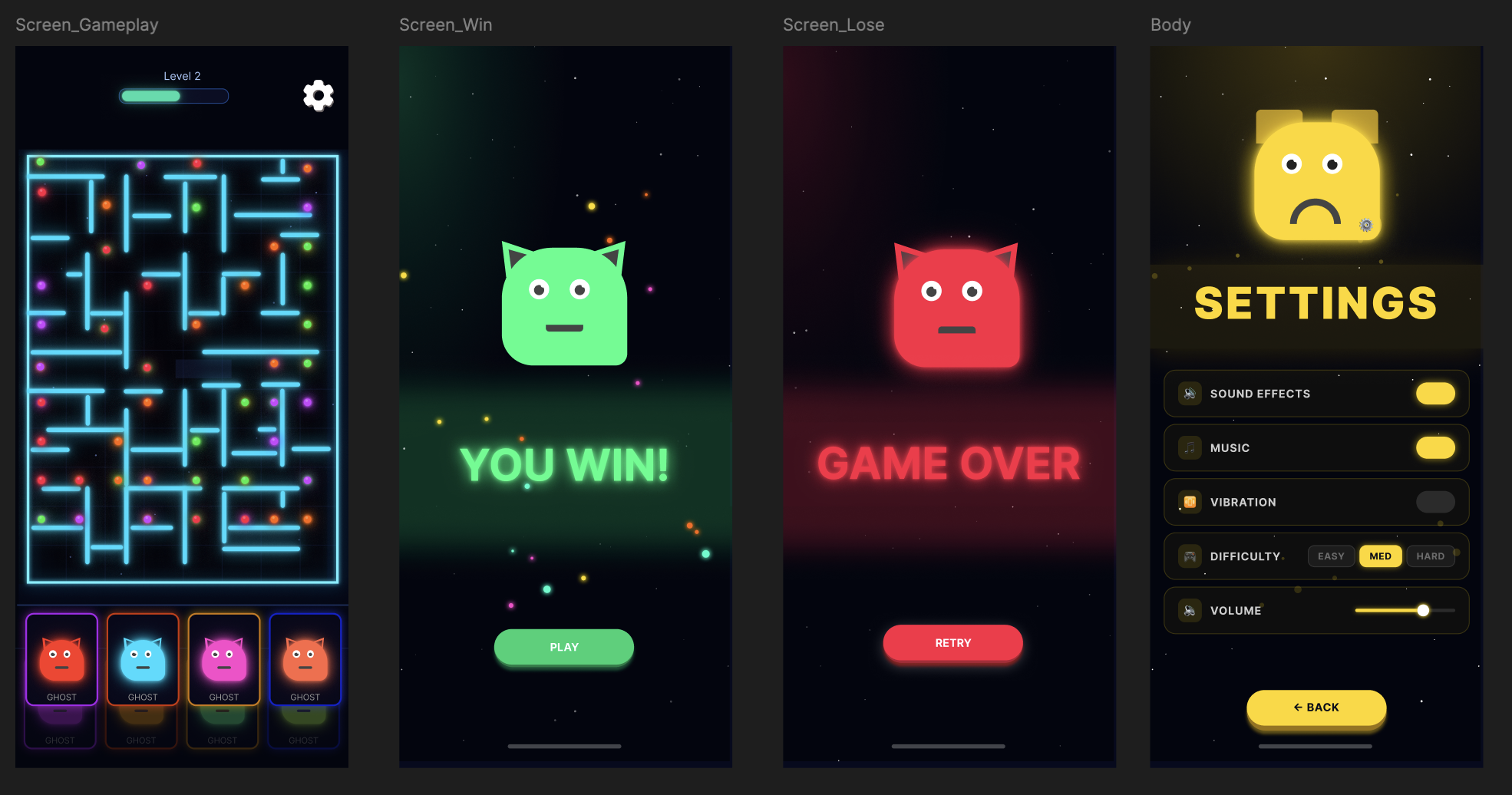
This project explored an end-to-end AI-assisted production pipeline, using Claude to generate game concepts and flows, Figma’s MCP integration to create initial UI layouts and assets, and Unity for implementation.
While the AI-generated designs provided a strong starting point for structure, user flows, and screen layouts, the visual quality of the assets and design system fell well below production standards. With the game scheduled to launch the following day, I rapidly redesigned and rebuilt the most critical UI assets, refining the visual language and improving overall usability while preserving the speed advantages of the AI-generated foundation.
Kitty the friendly ghost
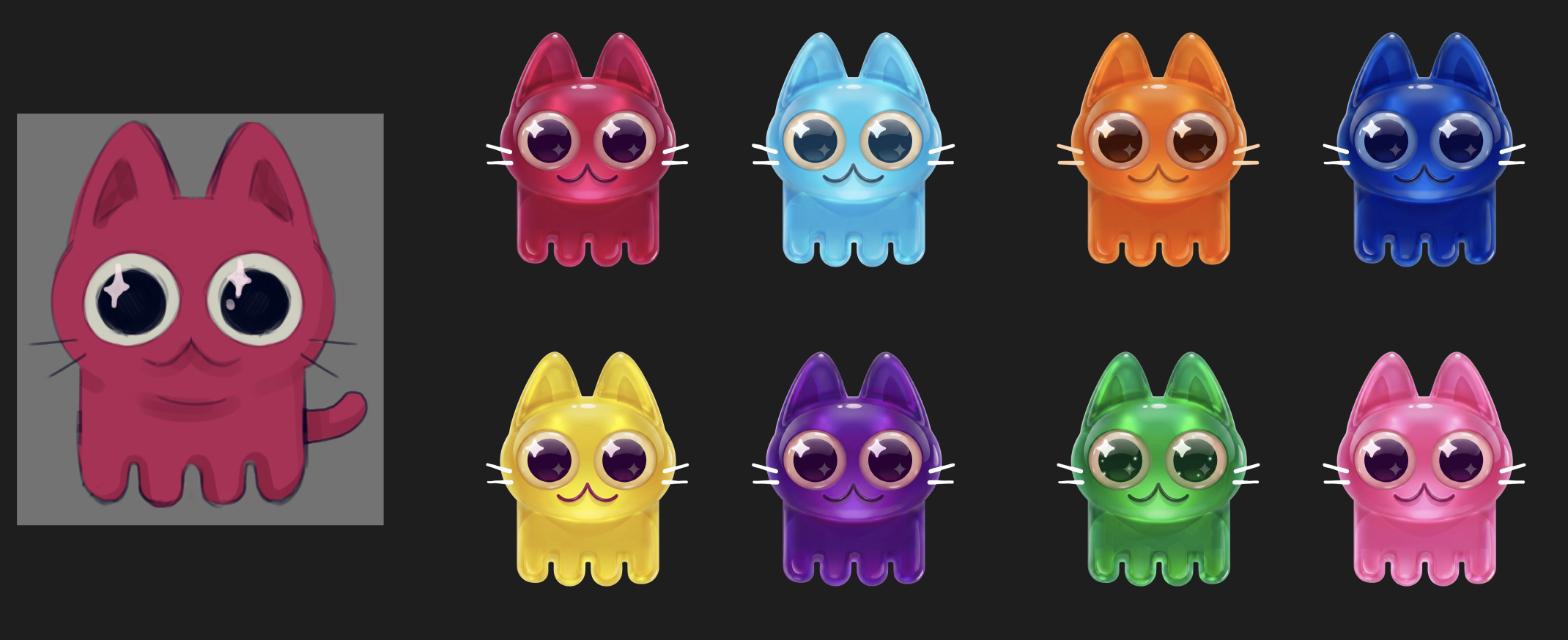
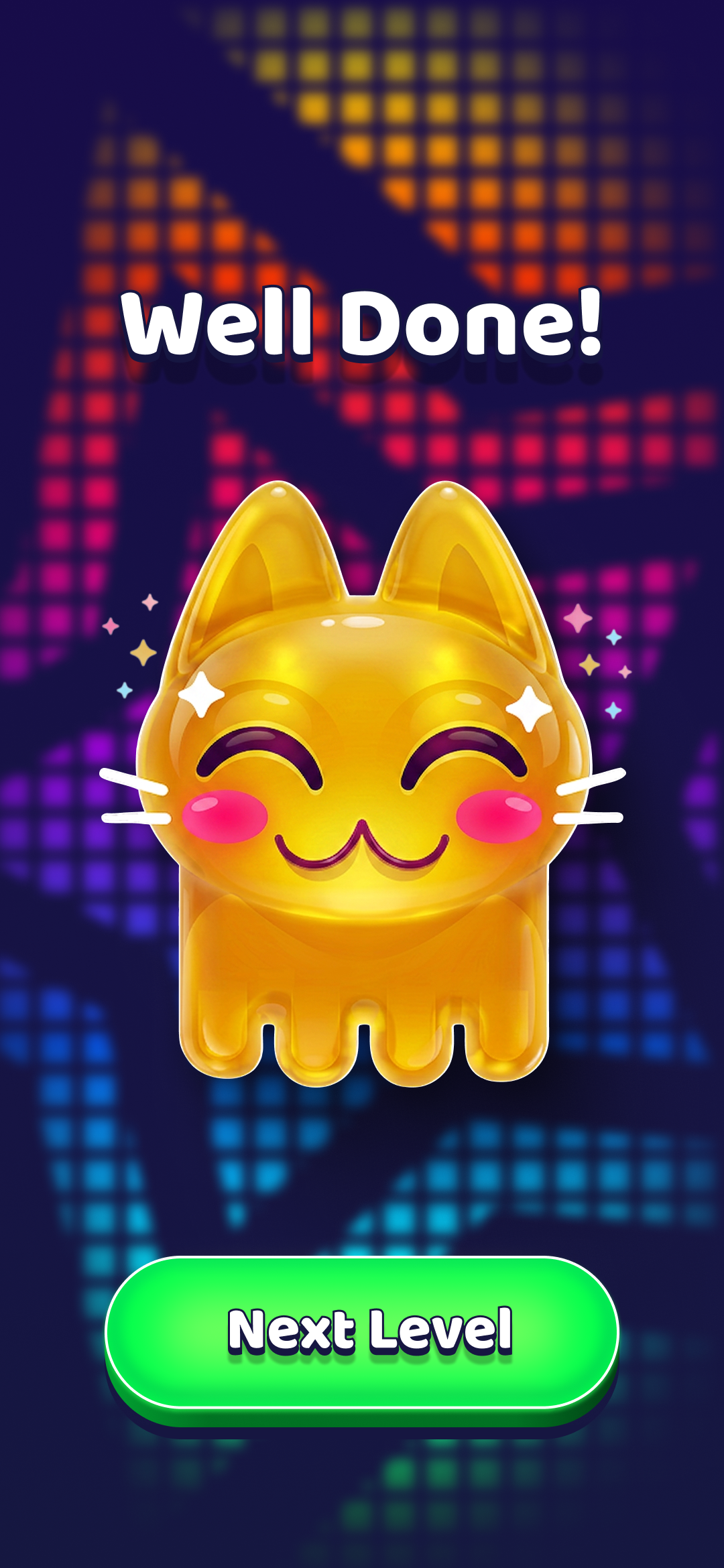
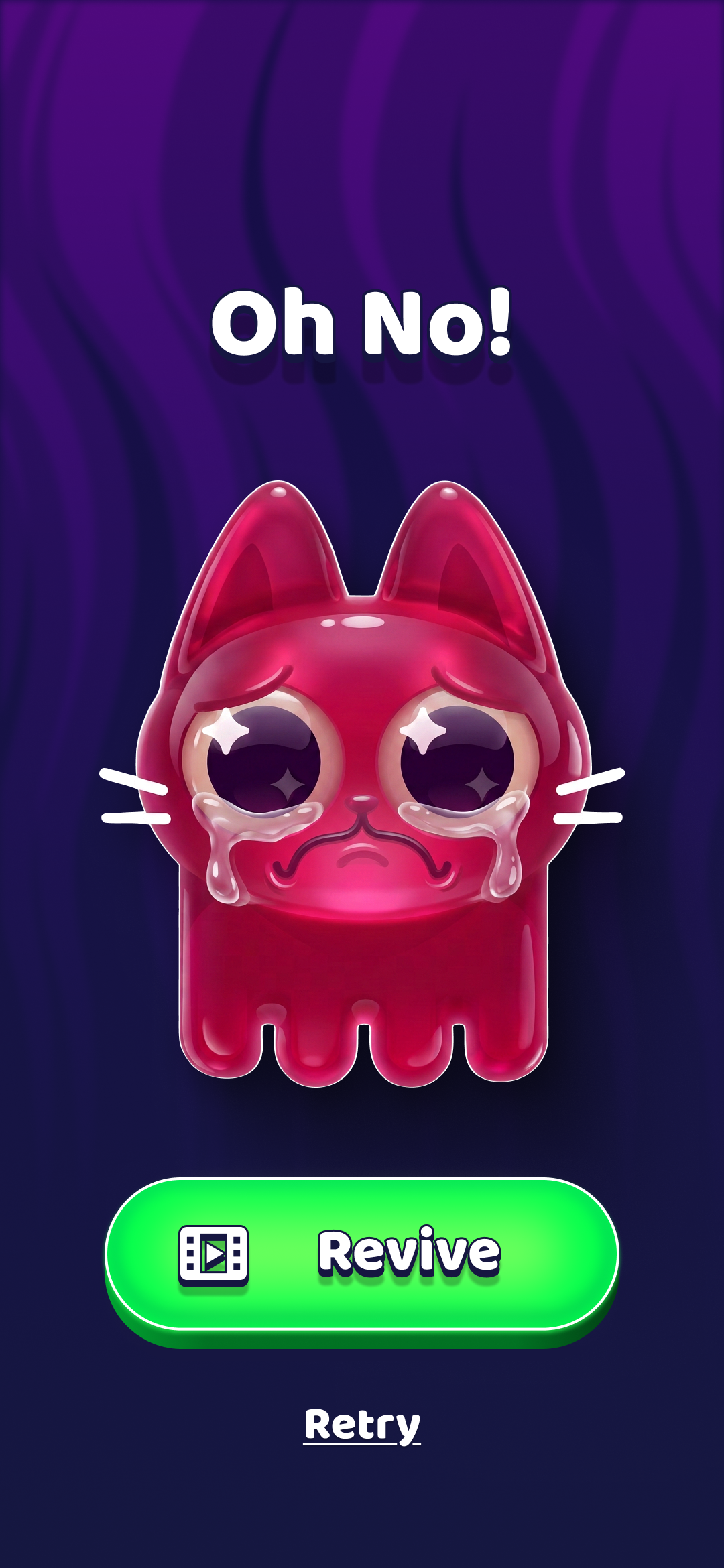
In the end, the arcade-inspired direction won out, giving us the perfect excuse to create a lovable star for the game: a hungry ghost cat.
The character started life as a handful of quick sketches exploring different shapes, expressions, and levels of ghostly charm. From there, I refined the design, taking inspiration from a certain iconic 80s arcade classic while making sure the character felt unique, cute, and easy to read during gameplay.
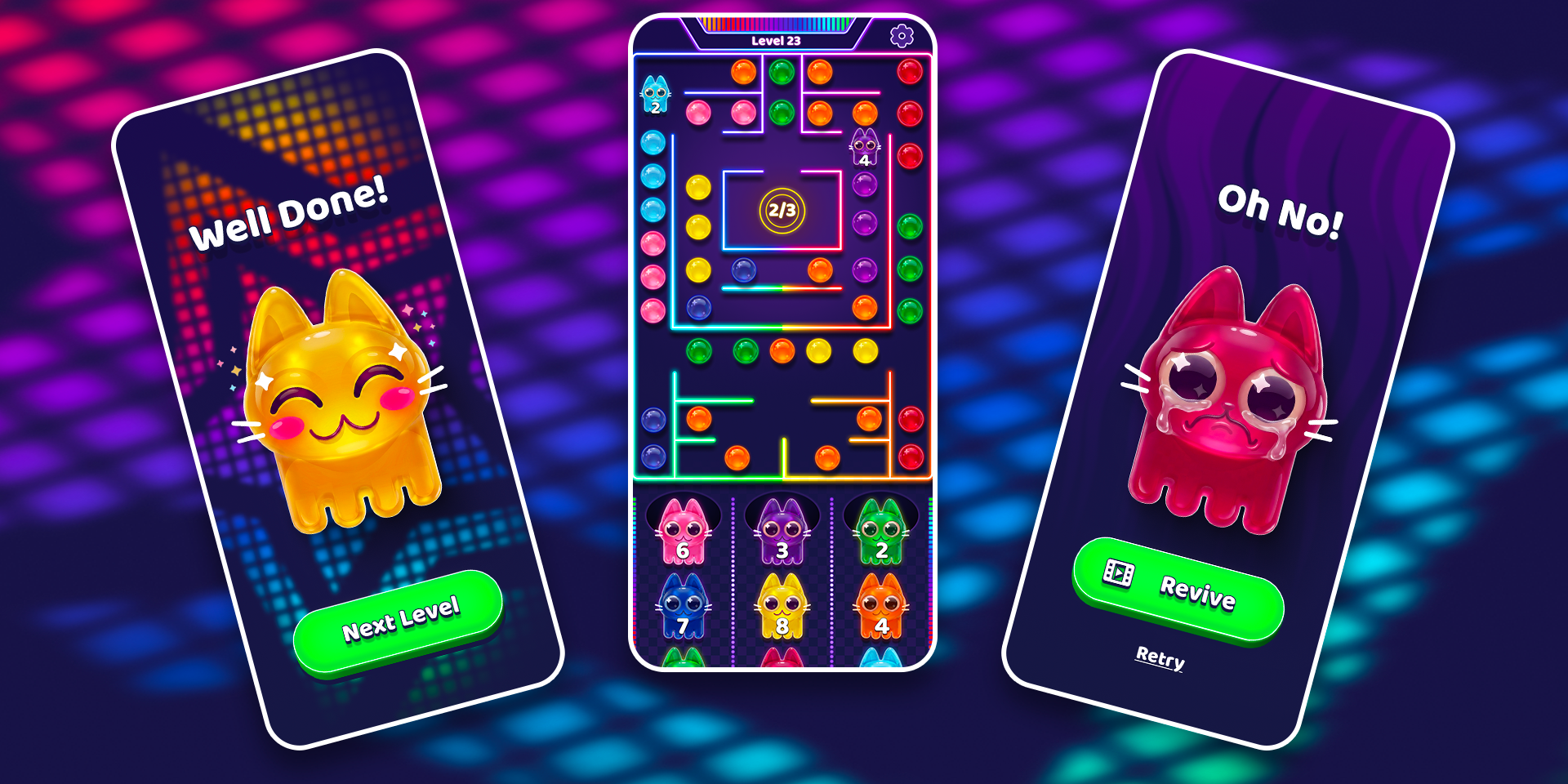
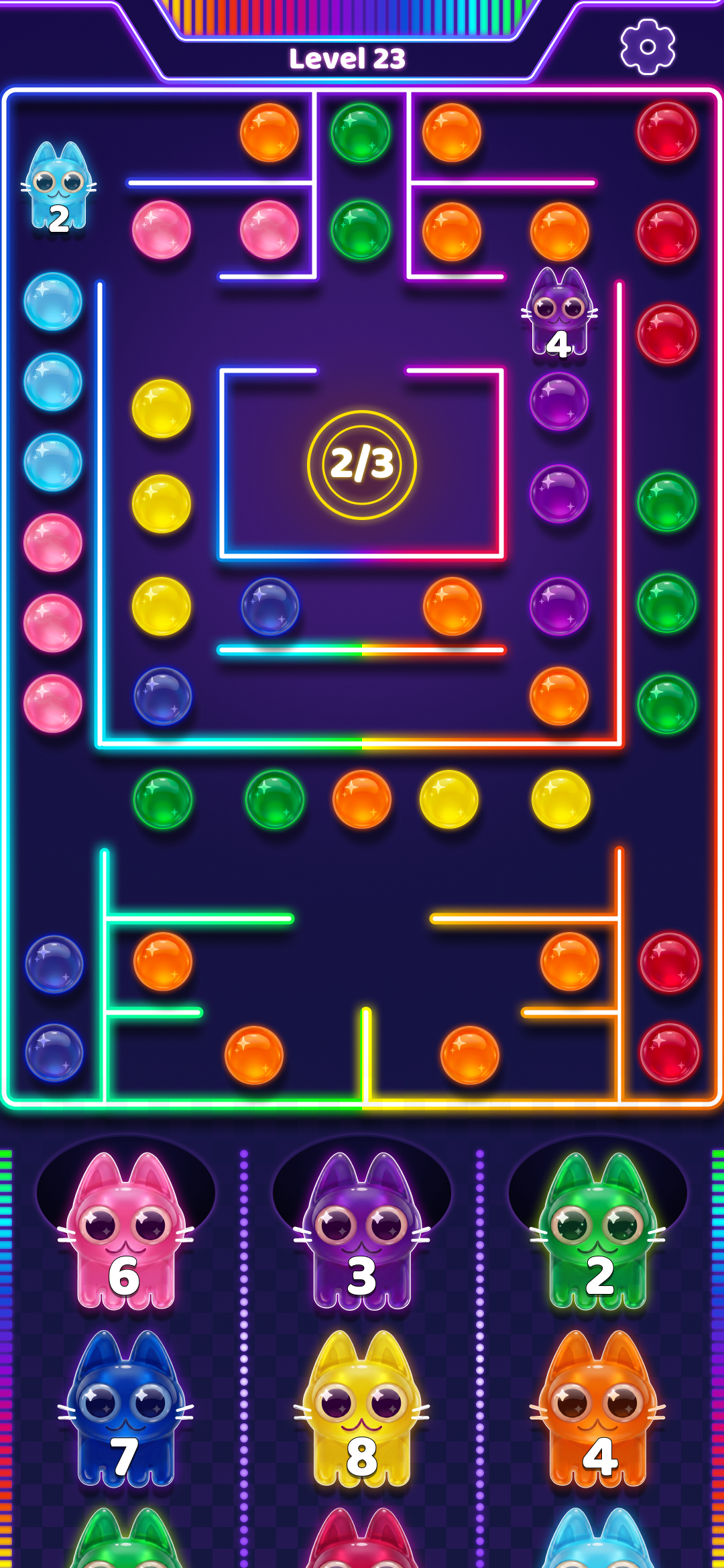
Screenshots
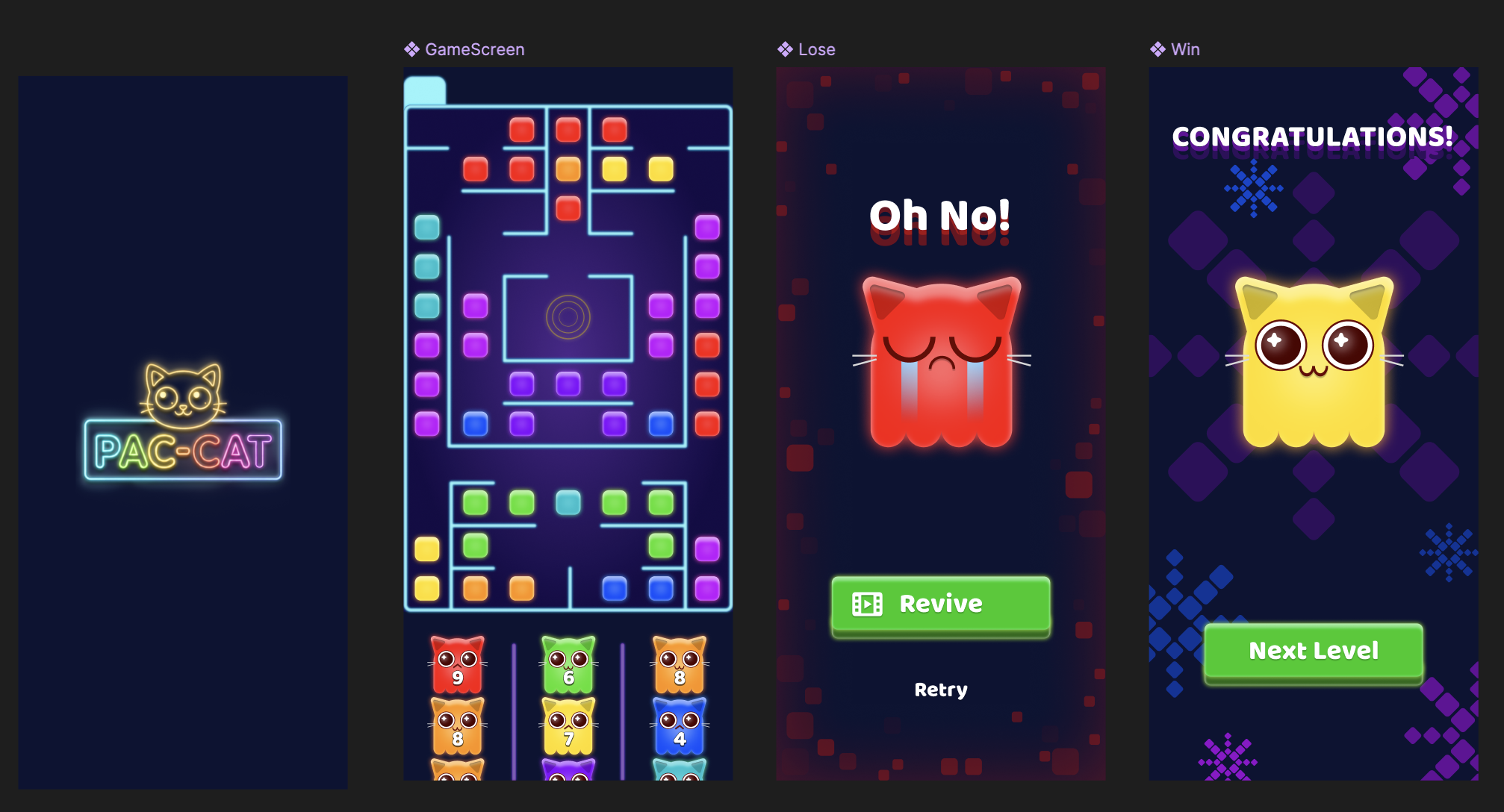
Visual exploration
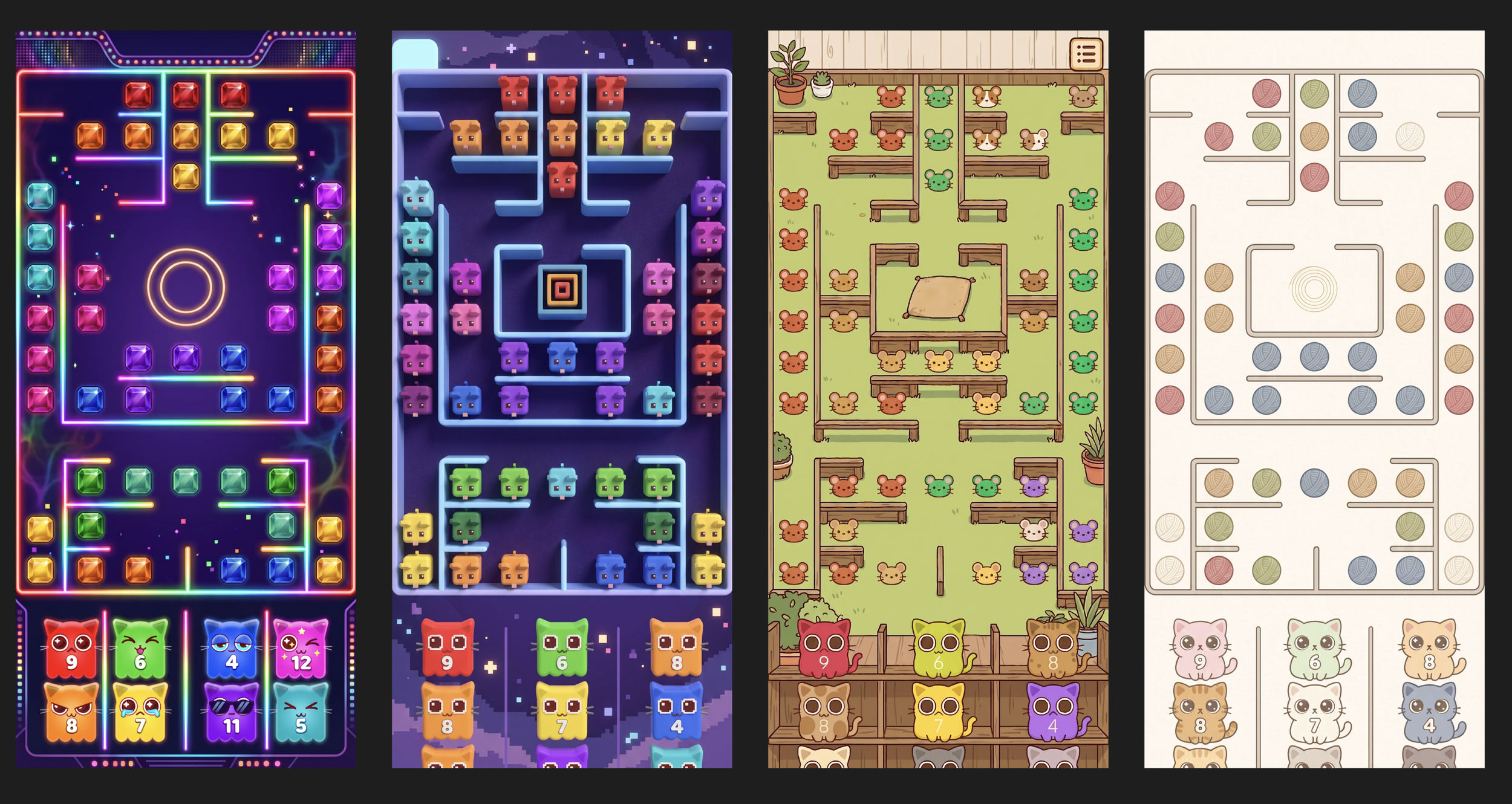
Following launch, the Product team shifted their focus to analysing early player data, creating an opportunity to revisit the game's visual direction. While the initial AI-assisted workflow had enabled rapid delivery, we felt the art style still lacked a clear identity.
We explored two distinct creative directions. The first focused on delivering a vibrant, arcadey experience, using bold colours and nostalgic influences to create a highly engaging aesthetic. The second embraced the game's puzzle roots, leaning towards a calmer, more minimal visual language designed to support focus, clarity, and a more relaxing player experience.
The concepts shown below were generated using AI as part of a rapid exploration process. Rather than serving as final designs, they acted as visual starting points that allowed us to quickly evaluate different artistic directions and identify opportunities for further refinement.